Years ago, in the 1990’s, whilst working at one of the children’s hospices, I had an experience which had a profound impact on me.
An experience that stroked my heart with it’s wisdom whilst simultaneously undressing me and laying me bare to the immense grief of a mum, dad and sister who had just had their lives implode following the death of their son and brother.
I was visiting a family whose adolescent son had recently died at home after a long illness. This young man had been visiting the hospice for respite for a few years and I, and other members of the team had built a lovely relationship with him.
On this visit to the family home, just 2 days after his death, the family shared with me, in detail, the final hours and minutes of their sons life.
It was not easy listening for someone in their 20’s.
But it was, for me, one of the most important and profound lessons in presence and listening.
Even to this day I remember where in their living room I was sat, who was present and where they were sat, how I was sat, who spoke and who sat silent.
I didn’t ask them for such a deep share. I didn’t probe.
I just showed up.
And provided the space and right conditions for them to feel safe and held.
I was the buffer. The cushion for alleviating some of the shock and a space where their intense grief, pain and suffering, their new reality, could meet the world outside of that.
I listened.
We held hands.
We hugged.
They needed to say it out loud, for their sons final moments to be acknowledged in this way.
And they needed me to hear their grief. Their pain.
Just one of the valuable lessons I took from this was that we are all buffers. Whether we are aware of it in the moment or not.
Where our grief (and everyone is grieving in some way), trauma and suffering meets the world.
Where someone’s pain and sadness meets your smile, your compassion, your kindness.
Probably the single most important thing we can do to prepare for death is live the best life we can with the kindness and compassion for our co-earth dwellers that supports them in having the best life too.
To live in this way of compassionate co-existing contributes hugely to the calmness, comfort, grace and acceptance at the end of life as opposed to grasping at what might have been, regret, disappointment and sorrow.
Live life with a little bit of oomph.
Caring less what others think and more about what your heart thinks.
The kindness that we exude in life, not just to others but to ourselves too, directly impacts the quality of our experience as we near the end (through age or illness) and as we die.
If you haven’t already started this type of prep then start today.
One of the most difficult things a person might encounter as they support their person through terminal illness and dying are changes.
Changes to the physical body, the emotional state and sometimes the personality too.
Not everyone will experience such significant changes.
But some will.
When we look at the physical changes alone, it’s usually as a result of illness or treatment.
I’m not simply talking about the general bodily changes that we expect to see as a result of the active dying process but the changes as a result of the ravages of treatment such as chemo, surgery and steroids or as a result of the illness itself such as the swelling and yellowing of the skin through advanced liver disease or perhaps even sever weight loss.
The person may look almost unrecognisable from the person you know and remember.
It can be scary and painful to witness that change.
You may even feel that you cannot visit your loved-one anymore as it’s just too traumatic to see them like that – it doesn’t feel like it’s them in their skin anymore.
And that’s ok. It’s normal to feel saddened or distressed by the altered physical appearance of your loved one.
You may feel that your person has already gone.
But they have not.
They are still there.
Under that changed façade, the swelling or weight loss, the skin changes or hair loss, the noisy secretions in your persons
throat and drool on their pillow is the very person who you love so dearly.
When or if you find the courage to visit them know that it’s ok to feel uncomfortable and upset when you see the changes and, if you can, see beyond that outer physical body and look into the heart.
Your person is still there even when they look so very different or cannot communicate with you, recognise you or open their eyes.
They are still the essence of the person whom you loved before these physical changes occurred.
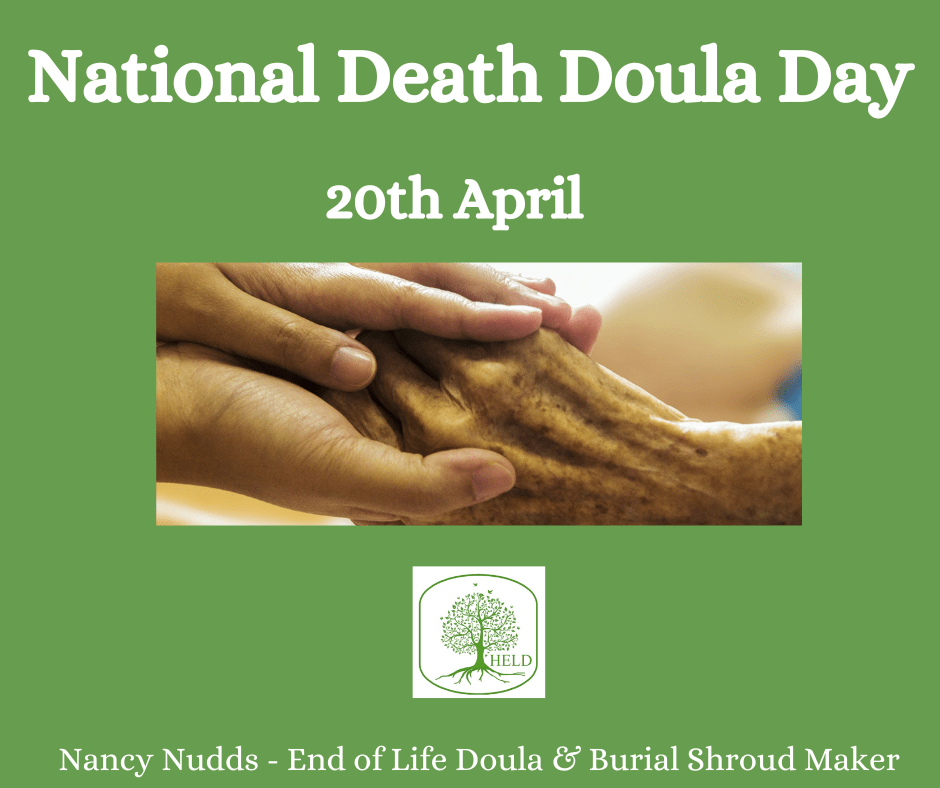
I invite you to touch their skin, hold their hand, stroke their face if it’s tolerable for your person and try to feel beyond the physical changes under your touch. Close your eyes if you feel that would be helpful. Their skin may be cooler, drier, more fragile to the touch, their hand unresponsive and yet, you can let your love be transmitted through that touch from your heart.
It will journey through the touch receptors in your loved-ones skin, and be fast-tracked to THEIR heart.
It can be difficult to know what to say when you feel confronted by these physical changes and yet, I invite you to speak tender words of love and gratitude, recalling fond memories and special moments.
Your person can still hear your words.
They know you are there and that is so very precious.
If this happens to your loved-one and you are struggling know that you are not alone.
Professionals such as myself or hospice can be there to support you.
Whether you decide to visit your loved-one or choose not to both are ok and you will be supported in your decision.
If you wish and are open to the idea, I or another person could relay your message of love to them or we could explore other avenues to transmit the tender love that you feel for them such as a video message, a letter, song, an item of your clothing or telephone call.
There’s a good chance that we will, at some point in our lives, become unpaid carers.
Parents, siblings, friends, partners, and, if you are very unlucky, children.
The scenarios I share below are ones I have witnessed across the board – from those caring for sick children at the hospice to those caring for a grandparent.
Or perhaps we might be supporting someone who is a carer.
Being a full-time carer for someone ill, frail or elderly is hard.
For you it may be an absolute labour of love and you wouldn’t have it any other way.
Or it may have been thrust upon you by life circumstances.
Either way, it can be hard at times.
And I’m not going to dress it up in flowers and positive quotes.
What a disservice that would be to you.
You will stop sharing the realities, the truth of how it is for you because you will not feel heard.
You will think you are doing it wrong.
That your love isn’t strong enough for your person.
Or you will feel like a failure.
So let’s talk about this.
Many a times you will feel like you can’t breath.
The stress of being the provider, the person who needs to make all the decisions, of having to tend even when you feel your chest is about to explode from the anxiety and grief fermenting inside,
The stress of having to get up in the night when the exhaustion barely allows your body to function.
It takes over your emotions & the overwhelming guilt of wishing it was all over weighs heavy on your heart and mind.
But, each day you get up and you go through the motions of being a carer, of tending to your loved ones needs as best you can with what you have.
And with as much tenderness and love as you can muster.
But sometimes the reserves of those are low.
Or empty.
You try not to let the emotional turmoil show but sometimes it just spills over.
Sometimes as a trickle.
Sometimes as an explosion of explicit words.
Like a valve release.
For the pressure of having to put your own needs and your own life on hold.
You struggle through days, weeks and sometimes months hoping that it will get easier, that you will get used to this new way of living when in actual fact you find yourself losing a part of yourself and it crushes you.
You can’t see an end to it.
And then you can see an end to it and that is equally as excruciating.
Visitors come and visitors go.
Supporting carers come.
And go.
And you envy that they step out of the door and back to their own lives.
Carers –
I see you.
I hear you.
And know that, no matter how much you struggle, how hard it is for you, that is not a reflection of not loving enough or not being compassionate enough.
No one wants to be in this club. It is a grief that not one of us who hasn’t experienced it can ever imagine.
Whether your child died in the womb, as an infant, teen, adolescent or adult the grief is immeasurable.
Neugeboren said – “A child that loses a parent is an orphan. But there’s no word for a parent that loses a child. That’s how awful the loss is.”
If you are a bereaved parent it’s ok to talk to and about your child. It can help you continue to feel connected to them. If you wish celebrate, pay homage to or attend to yourself kindly when significant dates come round (birthday, diagnosis day, date of death, funeral day). Mark these significant days in a way that supports and feels right to you. Including them in future events too honours their memory and can be a powerful way to bring them closer when the passing of time makes them feel so far away. Maintaining these bonds is not only healthy but can bring huge comfort and ease in a grief which is ever present.
Caring for someone at the end of life or facing end of life yourself can be a pretty daunting experience made more so when we don’t know what to expect.
And, to be fair, there’s is a lot about end of life that we don’t know.
But when we can familiarise ourselves with what we do know it can really help to alleviate some of that fear, concern or stress.
The active phase of dying is the final stage of the natural process of bodily functions slowing down and/or ceasing. It’s important to understand what to expect and to learn the signs of active dying, but it’s also important to keep in mind that predicting when death will occur is still difficult.
Keep in mind that everyone is different and don’t always exhibit all the signs.
So, here are some of the physical signs you might expect when someone is actively dying.
Breathing – will slow and, if you are fully present, you will notice that their breathing becomes irregular. This is known as Cheyne-Stokes breathing. There will be little spaces between each breath and these spaces will get longer and longer. You will be wondering, each time, if this is the last one. Breathing also becomes shallower. You may notice a rattling sound on the breath and in the throat which can be quite scary or uncomfortable to hear but it’s a perfectly normal part of the process and doesn’t usually cause discomfort to the person dying. More discomfort for the people listening to it! This is sometimes know as the death rattle. It might help to position your loved one on to their side to aid in the draining of any fluids if it is triggering coughing or choking episodes.
Skin can become blotchy – the blotches are usually pink or bluish in colour. The extremities such as the feet and hands might take on a bluish tinge. Their body might feel cooler but it might also feel very warm to the touch. If you suspect a temperature you can try to make your loved one comfortable by doing all the things you would usually do such as a cool flannel or removing layers of bedding. The important thing is to keep your person as comfortable as possible.
Eating and drinking – your person’s hunger will diminish. This is all perfectly normal so try not to force or encourage your loved one to eat – honestly, it won’t make them live longer but it may cause extreme discomfort as their body is shutting down and they are excreting less.
Bowels/bladder – linked to eating and drinking. As the body shuts down that includes ALL bodily functions so you may notice them passing less (or no) urine and faecal matter. In laymen’s terms peeing and pooing will stop.
Wakefulness/sleepiness – your person will spend increasing amounts of time sleeping. Only waking for brief periods until they lapse into unconsciousness.
Your loved one will become less responsive.
Until their last breath is taken you won’t know it was their last breath.
Take your time to be with them for a little while longer.
There is no hurry.
Linger – I love this word.
Linger until you are ready to leave their side.
As much as we wish it not to be so there is an amazing transformation happening during the active dying phase. Ultimately, trust that the body knows exactly what it is doing. It knows how to shut down. It knows how to die. Our bodies are amazing!
And just a reminder – your loved one or you may not experience all of these signs. Everyone is different and it doesn’t mean anything is wrong.
I have only touched on the physical aspects of dying in this post.
I will talk about other aspects such as agitation, confusion and other aspects of behaviour, emotion and what your loved one might see or hear in another post.
Four years ago today I completed my training as an End of Life Doula with the University of Vermont Starner College of Medicine and it’s had me reflecting on how these past 4 years have unfurled, memorable moments, how I’ve been touched by this work and where I’m at now.
Completing training and setting up during the first lockdown.
May 2020 The Holistic End of Life Doula (The HELD) is birthed.
Working on the bank of staff as a nursing auxiliary at my local hospices (both adult and children’s) during this very, very challenging time.
Weaving all of my skills into my doula role.
Meeting with family members to discuss, at their request, VSED (voluntary stop eating and drinking – which probably wouldn’t even need to be a thing if medical aid in dying was legal).
Seeing the dire need for decent, specialised care in the community at the end of life and stepping into that role to extend my services as a palliative and end of life PA so that people can have their wish to die at home fulfilled.
Navigating and learning of the various deficiencies and disjointedness within our current healthcare and care system,
Helping people complete their Advance Decisions, Advance Care Plans and Lasting Power of Attorney’s whilst they are still well AND in times of ill health.
Holding public workshops on how to “be” with and support people at the end of life.
Being present for lots of tears, laughter, anger, overwhelm, grief and love and everything in between.
I have visited funeral directors and green burial grounds.
Made my own burial shroud with advice from a funeral directors that I respect followed by the approval of The Natural Death Centre UK for listing my shrouds for others to purchase.
Served as a companion animal end of life doula.
I’ve witnessed my own triggers and weaknesses.
Reconfigured my own boundaries.
Have learnt that my own self care isn’t indulgence but vital to how I show up for others. For you.
Noticing that, within the end of life and, specifically, hospice and funeral services, there continues to be a lot of gatekeeping.
Where some are excited and welcoming to the presence of a doula and others feel threatened.
And that says so much more about their own insecurities than it does about us doulas.
St Christopher’s Hospice in London. worldwide trailblazers in palliative and end of life care recently advertised a salaried role for an End of Life Doula. It’s progressive and wonderful and I look forward to other hospices following their lead in the not-too-distant future.
Working on my latest project – Bringing Death To Life.
Walking alongside people who lean into it all and openly talk about death and dying to those at the other end of the scale who choose not to talk about such matters even in the process of dying.
Meeting people where they need to be and that might be different for each member of the family.
Listening.
Listening.
Listening.
Leaning in.
Witnessing breaths.
Witnessing life.
Witnessing death.
Witnessing sorrow.
Witnessing people fall apart and witnessing them picking up the pieces to carry on.
Witnessing such resilience.
Witnessing the uniqueness of each and every one.
Witnessing myself in highly charged environments, in profound moments, in the beauty and ugliness of it all and how I emerge knowing that I am still a student of it all.
How I emerge a slightly different person than I was before that encounter.
That death is the biggest teacher and holds the most wisdom.
Because we can never know all there is about life, death and everything that fills the space in between.
That, when I am “walking you home” I’m not necessarily talking about death being your final home or walking alongside you as you die even though that is exactly what it appears to be on the surface..
Or as you shift from the physical form that we know and love to universal matter that is more felt than seen.
The act of dying brings us home to our self like nothing I have ever witnessed before.
As death comes closer, the profoundness of life, the sanctity, the true essence of what is and is not important explodes and implodes into our awareness.
It invites us to unravel.
It invites us to shed layers of programming and conditioning.
To be curious.
Some resist it.
Some ride with it.
I am walking you home to your self.
The stripped back you.
The you that longs to be seen, heard, acknowledged, understood and loved.
The you that longs to forgive and be forgiven.
The you that wishes to find comfort with neither forgiving or being forgiven.
The you that longs to say the stuff that you’ve never got around to saying.
The you that seeks comfort when the opportunity to say these things to the important people in your life does not arise in the way you wished.
The you that wants to shout about the unfairness of it all and the you that is accepting and gracious of the life you have lived.
I walk alongside all of the emotions that arise and with the honesty that you seek.
I am walking you home to loving your self like you’ve never done before.
And those parts of you or your life that you can’t love?
Well, I am walking you home to acknowledging that and finding a way of being ok with not loving those parts.
Holding those parts of you with the tenderness you deserve.
Because when all the crap of life is set aside, cast away what is left is just the purest, unadulterated and complete you.
We don’t die perfect.
We die whole.
I will forever be deeply grateful for this training.
Not just for how it supports me in serving others as a doula but also for the richness it brings to my own life.
Getting intimate with dying and death, far from being morbid, defeatist, joy-depleting or whatever you might believe, is utterly life affirming, profound, enriching and heart-expansive.
I’ve come a long way since my first dive into end of life care in the early 1990’s. Both Quidenham Children’s Hospice and Rachel House in Scotland are intricately woven into the tapestry of my heart and soul.
And that, my friends, is a synopsis of my doula-ship so far.
It is ever evolving.
As am I.
What a gift it is to hold such open curiosity to the true mystery of it all and to be reminded how to live a life of richness, depth and meaning.
Thank you for being part of my continuing journey.
I am so grateful you are here and sharing it with me.
Encompassing the End of Life Doula, the Soul Doula, Soul Midwives and Deathwalkers.
So, you want to be an End of Life Doula?
I sometimes get emails from people interested in offering this service so what does it take to be one?
Well, let’s first begin by telling you that if you’re looking for an occupation that will make you financially rich or even financially comfortable then this isn’t for you.
It will, however, bring a richness to your heart and life that is priceless.
If you need an income appreciate that you will have other work running alongside being an End of Life Doula.
As a Doula you will be invited into life’s most profound, intense and humbling experiences.
Do you need to have experience in end of life care before training?
Not at all.
What’s most important is your propensity, willingness and ability to love, to hold space and listen deeply. Humility is absolutely essential in supporting the dying – we can’t and will never know it all because each and every one of you are unique.
Can you advocate for others sometimes in the face of opposition?
Are you resourceful? It really isn’t as simple as sitting at the bedside and holding a hand.
Can you trust the dying process and can you trust that your companion knows what is right for them?
Can you remain grounded and present when grief, suffering and overwhelm shares the same space?
Can you lean into that suffering?
Be absolutely present with it?
Are you resourceful? It’s not a matter of tending passively but digging into your resourcefulness when needs arise.
I strongly recommend that you DO gain some experience in being present with the dying either through working/volunteering in a care home or hospice. Caring for someone who is a relative or friend is very different to companioning a family that you don’t know at the end of life. Although, indeed, they will feel like family very quickly.
Some people come to this field who already work in healthcare such as doctors, nurses, social workers and healthcare assistants and some work in the holistic services but equally there are many from other areas of work who simply feel called to this.
Be prepared for the training to be deeply reflective.
A place where you will likely touch your own grief and suffering.
Be prepared for the practice of doula-ing – the practice of deep listening, holding space, humility, presence and tender loving to be ongoing. They are not skills that we reach the pinnacle of and stop but ones that require us to consciously practice. We are human and whilst practicing these skills we get to recognise where we could do better.
And be prepared for the dying to reveal to you that they are the biggest wisdom holders of all time.
I’m sure you’re aware by now that I don’t sugar-coat the realities of dying and death.
If all I did was share the beautiful, calm and non-problematic dying experiences I wouldn’t be doing justice to all of you who are struggling and you may feel more isolated and worry that you are doing something wrong.
You are not.
Dying can, indeed, be beautiful and life-enriching for some and for others it can seem like a hard slog to the finish line despite the best palliative care.
Depression is a common, although not universal, psychological condition among patients at the end of life and is estimated to affect around 5 -25% of palliative care patients and many experience depressive symptoms even when not given a clinical diagnosis. In fact, those receiving palliative care may face a greater likelihood of developing or worsening a clinical diagnosis of depression due to the awareness of their limited life expectancy. If left unrecognized and untreated this may lead to more severe illness symptoms such as pain, impair their ability to find meaning in life and consequently severely affect their quality of life, the quality of their relationships and bring about a poor prognosis.
The affect on the quality of their relationships can cause great distress to family, friends and care-givers at a time when a family member who is also a care-giver may be experiencing depression themselves form the huge burden of caring and the losses they have experienced and are yet to come.
The family dynamics face a major shift.
If the situation becomes intolerable family relationships can completely break down.
So let’s begin with this – do not confuse depression with grief.
Of course those dying will experience grief at their own demise and their own losses.
Grief and depression do share some distinct qualities and this is where the difficulties can sometimes lie.
Here are some of the symptoms of depression at the end of life:
irritability
insomnia or excessive sleeping
argumentative,
tearful
changes in appetite or an increased craving for food
lack of pleasure
more or less demanding of your time
agitation
sadness or unhappiness,
decreased concentration
forgetfulness or confusion
loss of energy/fatigue
feelings of
hopelessness
helplessness
guilt
resentment
worthlessness
thoughts of death or suicidal ideation.
Depression at the end of life (or at any time of life!) can cause significant suffering.
If in doubt reach out to your care provider – your gp or hospice/palliative care team.
Please don’t ignore it hoping it will go away – it won’t without some form of intervention.
If you recognise your own experience in this, past or present, know that you are loved and that it wasn’t/isn’t your fault.
Ways to celebrate and honour the mum’s who have died, who are seriously ill or who cannot be or are not present for whatever reason and regardless if this is your first Mother’s Day without them or you’ve had many without them physically present.
I’m sharing this ahead of the day to give you time to plan ahead a little.
Incorporate their favourite colour into your outfit.
Buy or plant their favourite flowers.
Listen to their favourite music or sing their favourite song.
Or watch their favourite film or tv show.
Cook their favourite dish or eat a favourite snack or beverage of theirs.
Play the games the loved to play.
If you saved something of theirs get it out, hold it in your hands, get tactile with it – it can help you feel close to them.
Look through old photos and reminisce.
Visit one of their favourite places.
Pray for them.
Raise a glass to them with their favourite tipple.
Wear their favourite perfume.
Light a candle.
Meditate with them in mind.
Re-tell their best and worst jokes.
Read one of their favourite books or magazines.
This is a hard one – go stand in front of a mirror, look at yourself and tell your mum, and in turn yourself, how much you care about them, what you love about them, how they brought you joy or share a special memory of the two of you together. This is so powerful because your mum is still a part of you. Your mum is incorporated into your DNA and into your energetic being – even if the mum you are celebrating is not biological. Even if the mum you are celebrating is the mother of your child/ren, a mother figure or you never met them.
Write them a letter telling them how much they mean to you or about your news. File it with the keepsakes you have kept of theirs, burn in a ceremony allowing the smoke and floating ashes to take your message to them or pop it in a letterbox to heaven if you have one local to you (my nearest is at St Barts in Marsden)
And last but not least – it’s ok to still buy them a card and display it prominently and proudly.
Whatever grief is there let it be present too.
In the next few days I will write about coping with or surviving Mother’s Day if your relationship was toxic, non-existent or if you are currently estranged from each other.

 xx
xx
 xx
xx


 HELD
HELD 